
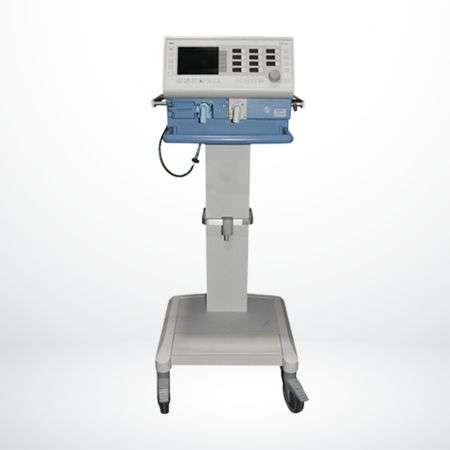
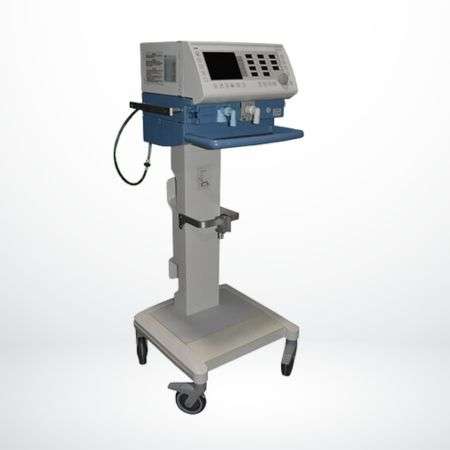
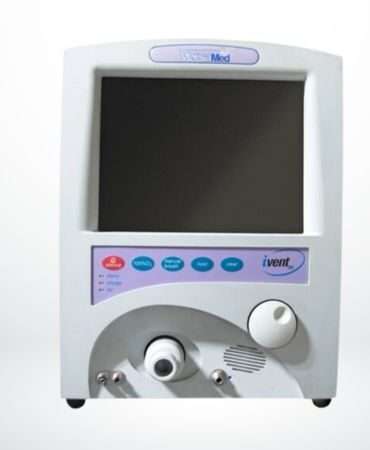
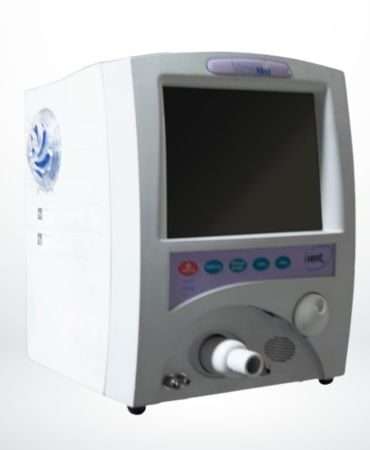
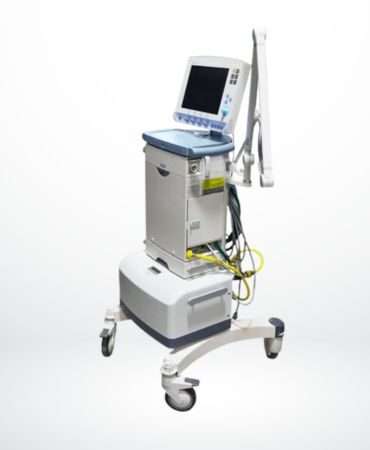
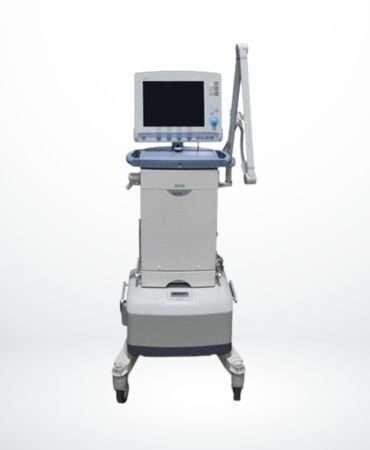
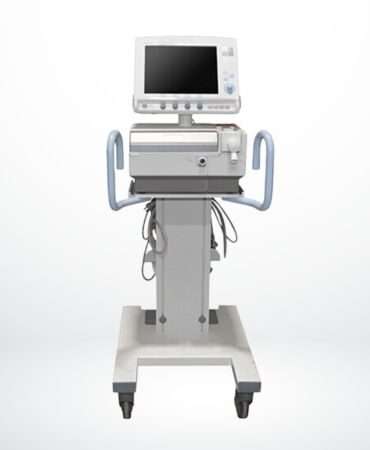
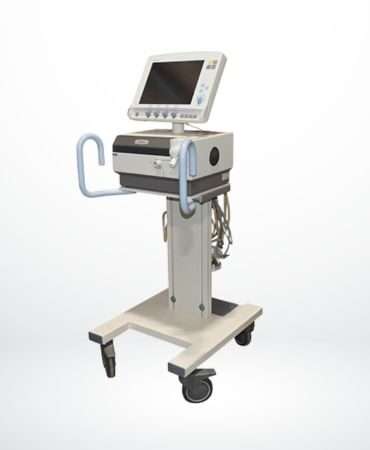
Drager Evita 2 Dura
27 people are viewing this right now

Guaranteed safe & secure checkout
Description
Reviews (0)
Questions
Description
Drager Evita 2 Dura Specifications
- Spontaneous breathing strategy. Spontaneous breathing reduces the risk of atelectasis and improves the ventilation/perfusion ratio by maintaining a higher functional residual capacity.
- The right mode for every patient. The wide range of patients covered also reduces the amount of staff training required and ensures greater flexibility in the use of resources.
- Two-in-one ventilation. Mask ventilation can assist the weaning process by reducing the reintubation rate or even preventing intubation in the first place.
- Everything in view. The high-resolution full-color screen displays comprehensive information on a patient’s status, always showing two ventilation curves and six monitored values, and the screen configuration can be customized to show the most important values for a particular ICU.
- One knob, simplified settings. The rotary knob plays a key role. The active setting parameters are visible at a glance and changes can be made by the well-established “select-adjust confirm” principle.
- Ventilation at a glance. The principle of only showing the necessary parameters reduces the complexity of everyday monitoring.
- Simpler and speedier standard procedures. Contains numerous functions to speed up and simplify routine procedures. Start-up settings can be configured to specific ICU practices.
Dimensions
- Height: 11.4 In (290 cm)
- Width: 20.9 In (530 cm)
- Depth: 17.7 In (450 cm)
- Weight: Approx. 27 kg (60 lbs)
- Diagonal Screen size: 6.5” TFT LCD color Display
Ventilation Settings
- Ventilation mode: IPPV, IPPVAssist (CMV, CMVAssist) SIMV, SIMVASB (SIMV, SIMV/Psupp) MMV, MMVASB (MMV, MMV/Psupp) BIPAP1), BIPAP1)ASB, BIPAP1)Assist (PCV+, PCV+/Psupp, PCV+Assist) CPAP, CPAPASB (CPAP, CPAP/Psupp) APRV (optional) ILV (optional)
- Enhancements: AutoFlow™ – Automatic adaptation of inspiratory flow in volume controlled modes ATC™ – Automatic Tube Compensation (optional) IV – Mask Ventilation (optional)
- Ventilation frequency (f): 0 to 100 /min, 0 to150 /min (Neonatal)
- Inspiration time (Tinsp): 0.1 to 10 s
- Tidal volume (VT) (BTPS): 0.1 to 2.0 L (Adult) 0.02 to 0.3 L (Pediatric) 0.003 to 0.1 L (Neonatal)
- Inspiratory flow: 6 to 120 L/min (Adult) 6 to 30 L/min (Pediatric and Neonatal)
- Inspiratory pressure: 0 to 80 mbar (cmH2O) PEEP / intermittent PEEP: 0 to 35 mbar (cmH2O)
- Pressureassist (PASB) (Psupp): 0 to 80 mbar (cmH2O)
- Rise time for inspiratory pressure: 0 to 2 s
- O2 concentration: 21 to 100 Vol.%
- Multi-sense Trigger Criteria: Internal automatic pressure trigger, Flow, Volume (Flow adjustable 0.3 to 15 L/min)
Measured Values Displayed
- IAirway pressure: Peak pressure, plateau pressure, mean pressure, PEEP, min. pressure (0 to 99 mbar/cmH2O)
- Minute volume (MV), (BTPS): MV, MVspont, MVleak (0 to 99 L/min)
- Tidal volume (VT), (BTPS): Inspired VT, expired VT, VTASB (VTPS) (0 to 3999 mL)
- Breathing frequency (f): ftotal, fspon, fmand. (0 to 300/bpm)
- O2 concentration: (FiO2) Inspired O2 concentration (15 to 100 Vol.%)
- Lung mechanics: Resistance ((0.0 to 600 mbar/L/s)(cmH2O/L/s) Compliance ((0.0 to 300 mL/mbar)(mL/cmH2O)
- Breathing gas temperature: 18°to 51°C
- Waveforms: Airway pressure-time, flow-time, volume-time, …
- Trends (optional): FiO2, MV, VT, f, PEEPi, R, C, etCO2, …
- Loops (optional): Paw-V, V-Flow, Flow-Paw, …
- Capnography (etCO2) (optional): 0 to 100 mmHg
- CO2 production (VCO2): 0 to 999 mL/min, STPD
- Serial dead space Vds: 0 to 999 mL, BTPS
Alarms / Monitoring
- Airway pressure: High/Low
- Expired minute volume: High/Low
- Tidal volume: High
- Tidal volume (VT) (BTPS): 0.1 to 2.0 L (Adult) 0.02 to 0.3 L (Pediatric) 0.003 to 0.1 L (Neonatal)
- Inspiratory flow: 6 to 120 L/min (Adult) 6 to 30 L/min (Pediatric and Neonatal)
- Apnea alarm time: 5 to 60 s
- Spontaneous breath frequency: High
- Inspired O2 concentration: High/Low
- Breathing gas temperature: High
- SpO2 pulse (optional): High/Low
- etCO2 (optional): High/Low
Performance Data
- Max. flow for pressure support and spontaneous breathing: 180 L/min (adult), 60 L/min (pediatric)
- Valve response time: ≤ 5 ms
- Control principle: Time cycled, volume constant, pressure-controlled
- Safety relief valve: 100 mbar (cmH2O)
- Leakage compensation
- Hose system compensation
- Outlet for pneumatic nebulizer
There are no question found.
Rating & Review
There are no reviews yet.