

Advanced Ventilator for ICU Patients by UM Healthcare India Pvt Ltd
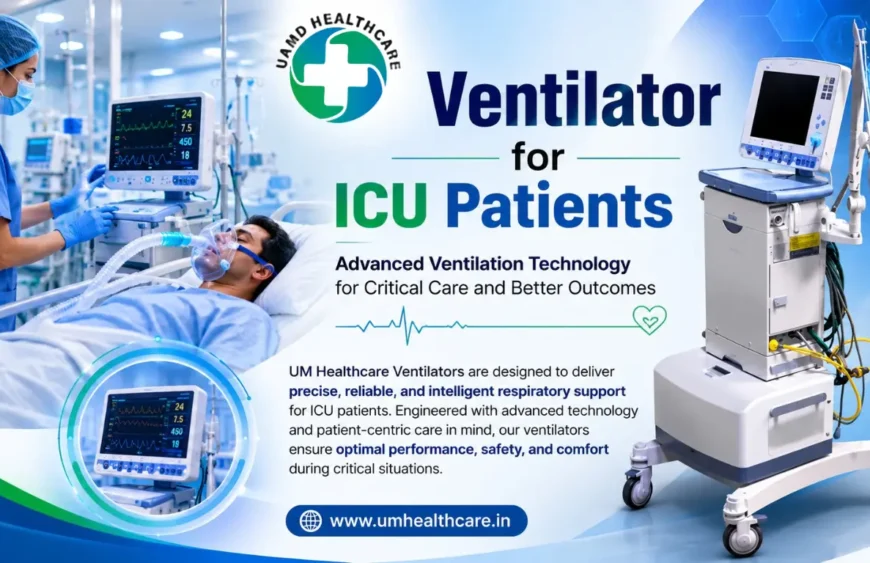
Ventilator for ICU Patients: A Complete Guide to Life-Saving Respiratory Support | UM Healthcare India Pvt Ltd
Introduction
In modern healthcare, advanced medical technology has significantly improved patient outcomes, especially in critical care units. Among the most important life-support devices is the ventilator for ICU patients, which plays a vital role in helping individuals who are unable to breathe adequately on their own. Whether treating severe respiratory infections, trauma, post-surgical complications, or chronic lung diseases, ventilators provide the necessary respiratory support that can save lives.
At UM Healthcare India Pvt Ltd, we understand the importance of reliable, high-performance medical equipment in intensive care settings. Our advanced ICU ventilators are designed to deliver precise ventilation, enhance patient safety, and support healthcare professionals in providing exceptional care.
This comprehensive guide explains everything you need to know about ICU ventilators, their working principles, benefits, features, and why choosing the right ventilator matters.
What is a Ventilator for ICU Patients?
A ventilator for ICU patients is an advanced medical device that assists or completely controls breathing when patients cannot breathe effectively on their own. It delivers oxygen-rich air into the lungs while removing carbon dioxide, ensuring proper gas exchange within the body.
Ventilators are commonly used in Intensive Care Units (ICUs) for patients experiencing severe respiratory distress or failure.
The machine works by delivering controlled breaths through an endotracheal tube or tracheostomy tube, continuously monitoring the patient’s respiratory parameters.
Why ICU Patients Need Ventilators
Several medical conditions can affect normal breathing, making mechanical ventilation necessary.
Common reasons include:
- Acute Respiratory Distress Syndrome (ARDS)
- Severe pneumonia
- COVID-19 complications
- Chronic Obstructive Pulmonary Disease (COPD)
- Asthma attacks
- Neurological disorders
- Brain injuries
- Major surgeries requiring anesthesia
- Trauma affecting the lungs
- Sepsis
- Respiratory muscle weakness
Mechanical ventilation ensures adequate oxygen supply while reducing the workload on the lungs.
How Does a Ventilator Work?
A ventilator functions by delivering oxygen into the lungs under controlled pressure or volume.
The process includes:
1. Oxygen Delivery
The ventilator provides oxygen-rich air according to the patient’s medical condition.
2. Controlled Breathing
The machine regulates:
- Respiratory rate
- Tidal volume
- Inspiratory pressure
- Expiratory pressure
- Oxygen concentration (FiO₂)
3. Carbon Dioxide Removal
The ventilator assists in eliminating carbon dioxide from the lungs.
4. Continuous Monitoring
Modern ventilators continuously monitor:
- Airway pressure
- Lung compliance
- Oxygen saturation
- Minute ventilation
- Respiratory rate
- Alarms for patient safety
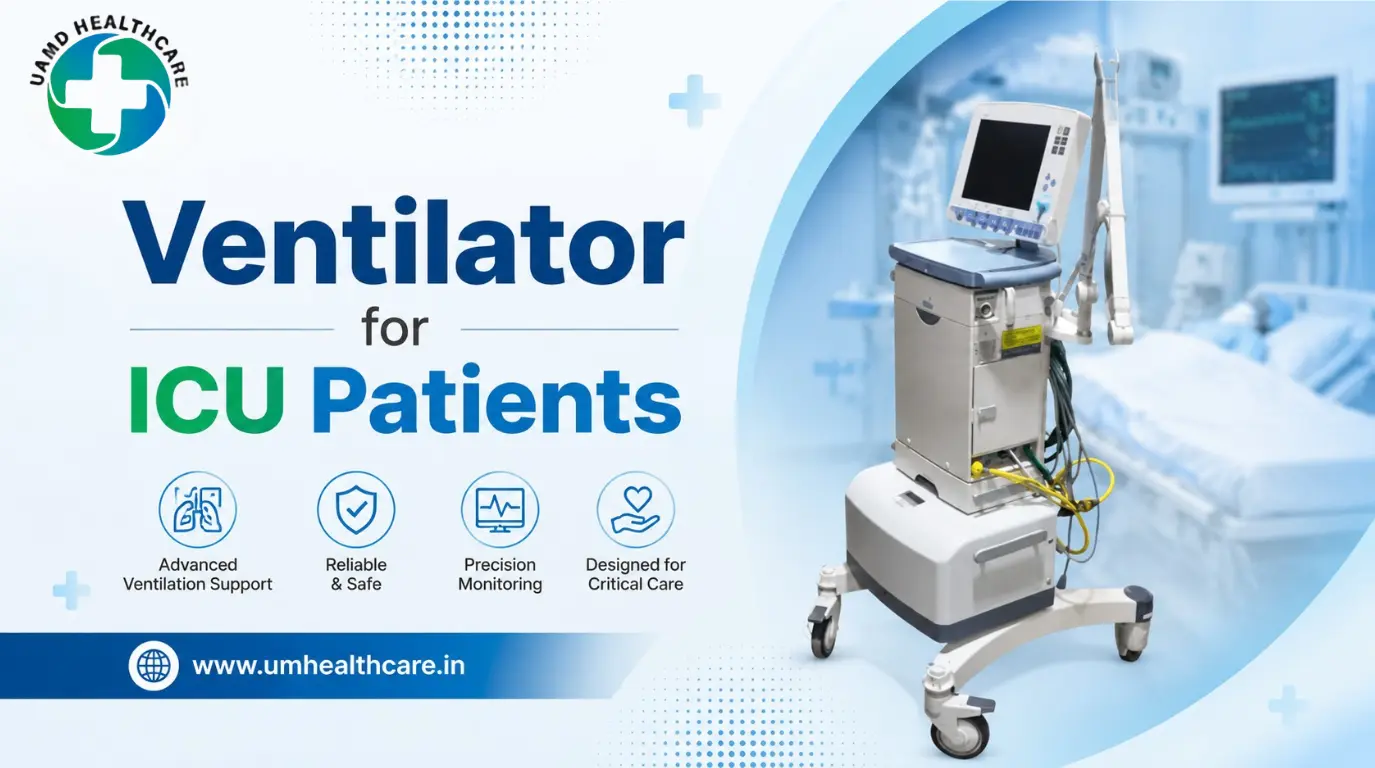
Types of Ventilators Used in ICU
1. Invasive Ventilators
These require insertion of a breathing tube into the patient’s airway.
Suitable for:
- Critical respiratory failure
- Major surgeries
- Severe infections
- Long-term ventilation
2. Non-Invasive Ventilators
These use masks instead of tubes.
Best suited for:
- Mild respiratory distress
- COPD exacerbations
- Sleep apnea
- Certain cardiac conditions
3. Portable ICU Ventilators
Designed for emergency transportation and ambulance services while maintaining continuous respiratory support.
Key Features of Modern ICU Ventilators
Advanced ICU ventilators include numerous intelligent features that improve patient care.
Some of the essential features include:
- Touchscreen interface
- Multiple ventilation modes
- High-flow oxygen therapy
- Automatic leak compensation
- Real-time patient monitoring
- Smart alarm systems
- Backup battery
- Portable design
- Adjustable oxygen concentration
- Integrated humidification compatibility
- Pressure support ventilation
- Volume-controlled ventilation
- Pressure-controlled ventilation
- SIMV mode
- CPAP mode
- BiPAP compatibility
These features enhance patient safety while simplifying operation for healthcare professionals.
Benefits of Using a Ventilator for ICU Patients
- Improved Oxygen Supply
Ventilators ensure continuous oxygen delivery even when natural breathing becomes inadequate.
- Reduced Breathing Effort
The machine reduces stress on respiratory muscles, allowing the lungs to recover
- Better Monitoring
Advanced ventilators provide real-time respiratory data for accurate treatment decisions.
- Supports Recovery
Proper ventilation helps stabilize patients suffering from respiratory failure and supports faster recovery.
- Life-Saving Technology
For critically ill patients, mechanical ventilation can be the difference between life and death.
Common Ventilation Modes
Modern ICU ventilators support multiple ventilation modes based on patient needs.
- Volume Control Ventilation (VCV)
Delivers a preset tidal volume with each breath.
- Pressure Control Ventilation (PCV)
Maintains a constant inspiratory pressure.
- Pressure Support Ventilation (PSV)
Supports spontaneous breathing efforts.
- SIMV (Synchronized Intermittent Mandatory Ventilation)
Combines mandatory and spontaneous breathing.
- CPAP
Maintains continuous positive airway pressure.
- BiPAP
Provides two pressure levels for inhalation and exhalation.
Why Choose UM Healthcare India Pvt Ltd?
UM Healthcare India Pvt Ltd is committed to delivering innovative healthcare solutions that meet the evolving needs of hospitals, ICUs, emergency care centers, and healthcare professionals.
Our Advantages
- High-quality ICU ventilators
- Advanced respiratory support technology
- Reliable performance
- User-friendly interface
- Competitive pricing
- Excellent after-sales support
- Timely product delivery
- Experienced technical assistance
- Compliance with international quality standards
- Trusted by healthcare providers
Our mission is to equip healthcare facilities with dependable medical equipment that enhances patient care and supports critical care professionals.
Maintenance Tips for ICU Ventilators
Proper maintenance extends the lifespan of ventilators and ensures safe operation.
Recommended practices include:
- Regular calibration
- Cleaning and disinfecting circuits
- Replacing filters as recommended
- Checking alarm functionality
- Inspecting tubing for leaks
- Performing preventive maintenance
- Monitoring battery performance
- Scheduling routine servicing
Well-maintained ventilators minimize downtime and improve patient safety.
Future of ICU Ventilator Technology
The future of mechanical ventilation is driven by innovation and digital healthcare.
Emerging trends include:
- Artificial intelligence-assisted ventilation
- Remote patient monitoring
- Cloud-based data integration
- Smart predictive alarms
- Automated ventilation adjustments
- Portable ICU systems
- Enhanced touchscreen interfaces
- Improved energy efficiency
- Advanced patient analytics
These advancements will continue improving critical care outcomes worldwide.
Conclusion
A ventilator for ICU patients is one of the most essential medical devices in modern critical care. It provides life-saving respiratory support for patients experiencing severe breathing difficulties, allowing healthcare professionals to stabilize and treat life-threatening conditions effectively.
Choosing a high-quality ventilator is crucial for ensuring patient safety, clinical efficiency, and better treatment outcomes. Modern ventilators equipped with intelligent monitoring systems, multiple ventilation modes, and advanced safety features help hospitals deliver the highest standard of intensive care.
UM Healthcare India Pvt Ltd is committed to providing advanced ICU ventilation solutions that combine innovation, reliability, and performance. Whether for hospitals, intensive care units, emergency departments, or specialized healthcare facilities, our ventilators are designed to support clinicians in delivering exceptional patient care with confidence.
Related Articles


Category
- Anesthesia Machine 3
- Bipap Machine 0
- Bubble Cpap 0
- Cautery Machine 0
- Defibrilator 4
- Ecg Machine 0
- Ecmo 2
- Endoscopy 0
- External Pacemaker 1
- Fetal Doppler/Ctg 0
- Harmonic Scalpal 2
- Heart Lung Machine 4
- Heater Cooler 4
- Hospital Projects 0
- Iabp Machine 2
- Infusion Pump 0
- Laparosocopy 0
- Maquet 1
- Medical Accessories 13
- Medical Batteries 0
- Patient Monitor 4
- Pressure Injector 0
- Pulse Oximeter 0
- Respiratory Consumables 2
- Surgical Instruments 0
- Syringe Pump 0
- Uncategorized 0
- Ventilator 9
- Ventilator Portable 0
- Vessel Sealer 0
